
Devil's Attorney
Senri IncPuzzle
4.52.23K Reviews
- Version
- Varies With Device
- Installs
- 500.00K
- Age Rating
- Teen
Screenshots



Our Review of Devil's Attorney
 Analysis by Appyee
I tend to judge mobile games by what happens after the first burst of curiosity: do I still want to open them once their central joke and basic loop are familiar? Devil's Attorney makes a lively first impression with its flamboyant courtroom world, but its more lasting appeal comes from the small decisions between cases. It is a paid puzzle-strategy game from Senri Inc, released in 2012, and its comic take on legal battles gives it a distinct personality without asking me to treat every session like a serious campaign.
The first week: a quick, memorable hook
The premise is easy to grasp even if you do not usually play strategy games: take the role of a lawyer who is much more interested in winning than behaving respectably. The comedy gives the battles a welcome sense of occasion, while turn-based play lets me pause and think instead of demanding quick reactions. That makes it a comfortable choice for short sessions, especially when I have a few spare minutes and want something more involved than a reflex game.
The appeal is not simply that the setting is unusual. The courtroom exchanges and exaggerated personalities make the individual cases feel like part of a cheeky world, rather than abstract puzzles with legal decoration. I found that a useful distinction from many mobile strategy games, which often lean on fantasy combat, match-based competition or steadily expanding collections. Here, the humor is part of the reason to keep playing, and the tactical decisions give the jokes a playable framework.
How the tactical loop earns attention
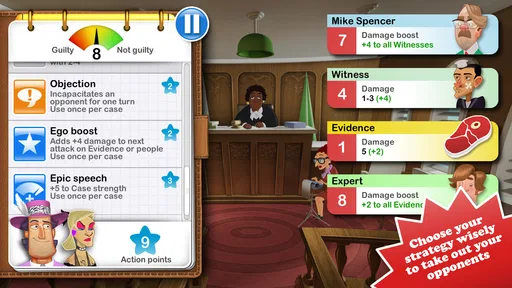
The core challenge is to reduce an opponent’s credibility while protecting your own. Since the game is turn-based, I can consider which move suits the state of a case rather than tapping through a sequence as quickly as possible. Skills fall under Materialism, Decadence and Vanity, and the categories give the choices a bit of character as well as a strategic purpose. I would not treat any single skill as an automatic answer: the useful choice depends on the opposition and on what needs attention in that particular exchange.
One practical way to approach a difficult case is to look at the immediate courtroom problem before spending a turn. If my own position is under pressure, it can be wiser to stabilize it than to chase a quick hit against the other side. When the situation is comfortable, I can focus on reducing the opponent’s credibility. That simple habit makes the battles feel less like button selection and more like a series of small priorities, and it helps prevent the turn-based format from becoming mere routine.
Winning also feeds into a progression loop: money and prestige can go toward new skills and improvements to Max’s apartment, with those upgrades helping in court rather than serving as decoration alone. That creates a useful decision outside the cases, too. I would think about which improvement supports the kind of play I am struggling with, rather than buying upgrades simply because they are available. The reward is most satisfying when it addresses a real need; otherwise, the between-case spending risks feeling like a checklist.
The Wacky World of Max McMann
The main character, Max McMann, is the kind of lawyer who thrives on chaos. Right from the start, the game throws you into his world—a place where logic takes a backseat and flamboyance rules the courtroom. The storyline is a delightful mix of humor and brilliant voice acting, making every interaction a joy to behold. It's not every day you find a game that makes you chuckle while keeping your strategic brain engaged.
Gameplay Mechanics
Devil's Attorney is all about using your charm and skills to outmaneuver prosecutors and win cases. The game is turn-based, giving you ample time to plan your moves. Each case you take on comes with a set of opponents, and your goal is to reduce their credibility while maintaining yours. You do this by using various skills divided into three categories: Materialism, Decadence, and Vanity. Each skill affects the courtroom dynamics differently, and choosing the right combination is key to winning.
As you progress, you earn money and prestige, which you can use to upgrade Max’s apartment and unlock new skills. The apartment upgrades are not just for show—they actually boost your abilities in court. It's a clever way of tying in progression with personalization, and it keeps the game engaging as you strive to make Max the most notorious lawyer in town.
Visuals and Sound
The art style of Devil's Attorney is vibrant and cartoonish, which fits perfectly with the game's humorous tone. The characters are exaggerated in the best possible way, adding to the overall comedic atmosphere. The soundtrack is catchy, with a jazzy vibe that complements the courtroom antics nicely. The voice acting deserves a special mention—it's spot-on and adds a layer of personality to the already colorful characters.
Why It Stands Out
What really sets Devil's Attorney apart from other strategy games is its narrative depth and character-driven humor. The developers have crafted a world that feels alive and filled with personalities that are both ridiculous and endearing. The game doesn’t take itself too seriously, which is refreshing in a genre often dominated by high-stakes and intense themes.
Another standout feature is the game’s pacing. It’s perfect for mobile play, with cases that are short enough to tackle during a coffee break, yet complex enough to keep you intrigued. The learning curve is just right, making it accessible to newcomers while still offering enough depth for seasoned strategists.
Keeping it in rotation
For lasting value, I would treat this as a compact campaign to return to when I want a self-contained tactical diversion, not as a daily game that must continually supply new routines. Its strongest recurring pleasure is refining how I use the three skill families and deciding where the next upgrade can help. If I play several cases in a row, I may start noticing the repetition in the basic objective; spreading sessions out can make the theatrical tone and decision-making feel fresher.
That makes it particularly suited to a commute, a quiet lunch break or an evening when I want a little planning without committing to a long strategy session. A realistic use is to play one case while waiting for an appointment, then stop at the next natural break rather than beginning a longer activity. The turn-based pace is forgiving of interruptions, though I would still avoid starting a case if I expect to be pulled away immediately: losing the thread of a tactical exchange can make a short session feel less satisfying.
Value, upkeep and the right expectations
The game costs $4.99, so I would weigh it as a one-time purchase for a specific kind of entertainment rather than compare it with free games designed around frequent check-ins. Its average rating is 4.6 from around 18,000 ratings, and it has over 500,000 installs; those figures suggest that the oddball concept has found an audience, but they do not answer whether its particular humor or strategy suits you. It is rated Teen, so the comic legal setting is not aimed at very young children.
There is little maintenance in the everyday sense: the appeal is in playing cases and making progression choices, not tending a roster or keeping up with a competitive schedule. That is a relief if, like me, you dislike games that turn leisure into reminders. The trade-off is that a compact, authored experience has less natural reason to become a permanent daily habit than a game built around fresh opponents or constantly changing challenges. I would keep it installed if I enjoy revisiting its battles; I would not expect it to manufacture endless novelty for me.
Compared with puzzle games built around matching shapes or solving isolated boards, this asks me to think about a sequence of courtroom moves and the condition of both sides. Compared with larger strategy games, it is more approachable and much less about managing a sprawling world. Choose it for character, comic presentation and bite-sized tactical decisions. Skip it if you want realistic legal drama, deep simulation, rapid action, or a puzzle format where every level presents a wholly different mechanic. The game’s specific flavor is its strength, but it is also the reason it will not suit everyone.
One useful way to avoid frustration is to read a case as a changing balance rather than assume that the most aggressive move is automatically best. I would also treat apartment spending as part of the strategy: upgrades affect courtroom performance, so it is worth pausing between cases to consider what would make the next encounter easier. Those small choices provide more long-term texture than simply pressing ahead, though they cannot remove the possibility that the familiar battle pattern will eventually feel repetitive.
What to expect from a paid mobile game
Because it is paid, the decision is straightforward: you are paying for this particular blend of comedy and turn-based play, not for a promise of a continuing service. I would recommend it to someone who enjoys tactical choices but wants a lighter mood than a conventional war or fantasy strategy game. I would steer a player toward a broader or more replay-focused alternative if they need an ongoing stream of content, competitive play or a deep system to master for months. For me, the best fit is a player who values a distinct campaign and can enjoy returning in modest doses.
The game is also a reasonable entry point for someone who finds strategy intimidating, since turns allow time to consider a move and the three skill categories offer a memorable way to organize choices. That does not mean every case will be effortless: the challenge comes from deciding which pressure matters most, and progression choices can influence how prepared Max feels. If you are new to turn-based games, take a moment to understand what each action is doing instead of spending moves just to see what happens. It is a simple habit that makes the tactical side more rewarding.
Final Thoughts
If you're looking for a game that's both engaging and hilarious, Devil's Attorney is a must-try. It’s a brilliant blend of strategy, humor, and charm that will have you coming back for more courtroom chaos. Whether you're a fan of strategy games or just looking for something different, this game is worth every minute of your time. Grab it on Android or iOS and become the devilishly clever lawyer you always knew you could be.
My longer-term verdict is a little more measured: it earns space on my device when I want a distinctive, self-contained strategy game, but I would not make it the center of a daily gaming routine. Senri Inc’s playful courtroom concept remains the strongest reason to return, and the apartment upgrades give progression a practical purpose. With an October 2012 release behind it, I would approach it as an established older game rather than a new live-service habit. If its humor lands for you and you like weighing turns at your own pace, the $4.99 price feels easier to justify; if you need variety without repetition, I would choose something broader.
Verdict
Strengths of Devil's Attorney
- Engaging storyline with humorous dialogue.
- Intuitive turn-based strategy gameplay.
- Unique character customization options.
- Vibrant and colorful graphics.
- Challenging levels that keep you hooked.
Limitations of Devil's Attorney
- Limited replay value after completion.
- Some in-app purchases may be pricey.
- Can be too easy for seasoned gamers.
- Occasional repetitive gameplay elements.
- Requires consistent internet connection.
Similar Picks in This Category
View All
Block Blast!
HungryStudio4.8

Braindom: Brain Games Test
Lahana Game Studio4.6

AMAZE!
CrazyLabs LTD4.6

Sudoku - Classic Sudoku Puzzle
Oakever Games4.7

Art Puzzle - Puzzle Games
Easybrain4.8

Amaze GO!
Oakever Games4.9
Frequently Asked Questions
What is the main objective of Devil's Attorney?
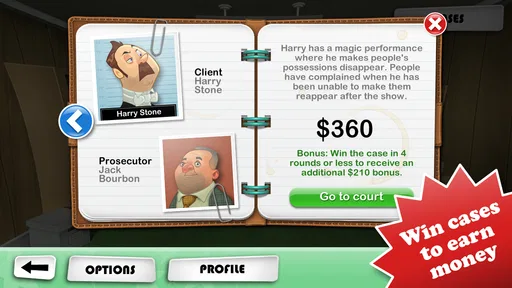
Devil's Attorney is a turn-based strategy game where you play as Max McMann, a charismatic defense attorney. The main objective is to win cases to earn money, which can be used to purchase items and skills that enhance Max’s abilities. Each case presents unique challenges, requiring strategic thinking to ensure victory.
Is Devil's Attorney suitable for all ages?
Devil's Attorney is rated for teens and above due to its mature humor and themes. While the gameplay is light-hearted and comedic, some topics and dialogues might not be suitable for younger audiences. Parents are advised to review the game’s content to determine if it aligns with their family’s values.
What are the system requirements for Devil's Attorney?
For Android, Devil's Attorney requires Android 4.0.3 and up, while iOS users need iOS 8.0 or later. The game is compatible with both iPhone and iPad. It's essential to ensure your device meets these requirements for optimal performance and to avoid any compatibility issues.
Does Devil's Attorney offer in-app purchases?
No, Devil's Attorney does not feature in-app purchases. Once you purchase the game, you have access to all its content. This allows players to enjoy the full experience without additional costs, making it a one-time purchase that provides complete access to the game’s features and challenges.
How does the skill upgrade system work in Devil's Attorney?
In Devil's Attorney, you earn money from winning cases, which can be used to purchase skills and items. These upgrades enhance Max’s courtroom abilities, such as persuasion and evidence tampering. Strategically choosing upgrades is crucial to dealing with increasingly difficult opponents and complex cases as you progress through the game.
Play our best games!


